





Are membrane keyboards good for gaming?
 Feb 20, 2025|
Whether membrane keyboards are suitable for gaming is a question that needs to be analyzed from multiple perspectives. As a supplier, we need to consider the design, performance, cost, and market demand of membrane keyboards to answer this question.
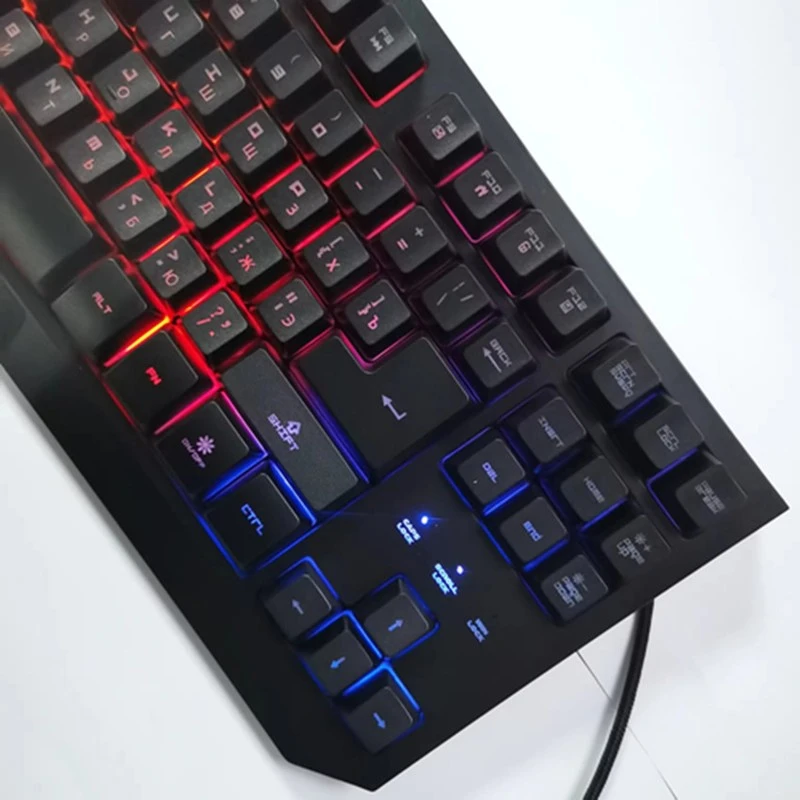
1. Structure and working principle of membrane keyboard
The core structure of membrane keyboard consists of three layers of membrane:
- Upper circuit membrane: a membrane with a conductive coating, usually in contact with the bottom of the key.
- Spacer layer: a membrane with a hollow design, used to isolate the upper and lower circuits.
- Lower circuit membrane: a membrane with a conductive coating, used to receive signals.
When the key is pressed, the upper circuit membrane contacts the lower circuit membrane through the hollow part of the spacer layer, forming a closed circuit and triggering a signal. This design is simple and low-cost, but the trigger stroke is long and lacks obvious tactile feedback.
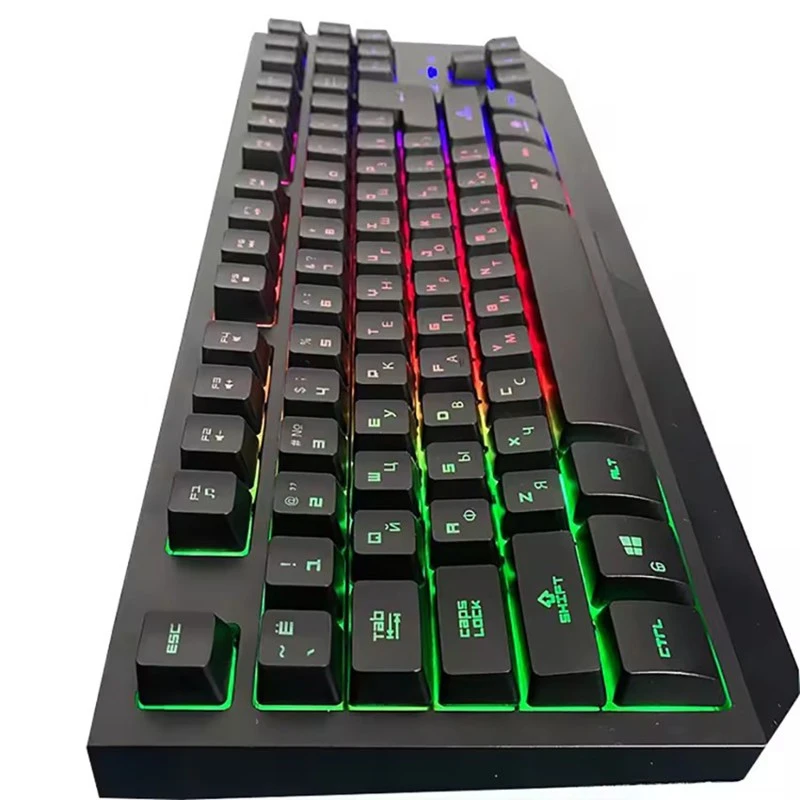
2. Analysis of the gaming performance of membrane keyboards
(1) Trigger speed
The trigger mechanism of membrane keyboards requires the key to be fully pressed to trigger the signal, and the trigger stroke is usually 3-4mm. For games that require fast response (such as FPS, MOBA, etc.), this long trigger stroke may cause operation delays and affect the gaming experience.
(2) Touch and feedback
The keys of membrane keyboards have a softer touch and lack the clear "click feeling" and feedback of mechanical keyboards. For gamers who need precise operation, this fuzzy touch may lead to misoperation or inaccurate operation.
(3) Key conflict (ghost key problem)
The circuit design of membrane keyboards usually adopts matrix scanning, which may lead to key conflict (that is, when multiple keys are pressed at the same time, some key signals cannot be recognized). For games that require multiple keys to be operated simultaneously (such as fighting games or MMORPGs), this may be a significant disadvantage.
(4) Durability
The key life of membrane keyboards is usually between 5 million and 10 million times, which is much lower than the 50 million times of mechanical keyboards. For high-frequency game scenarios, the keys of membrane keyboards may lose elasticity or malfunction due to long-term use.
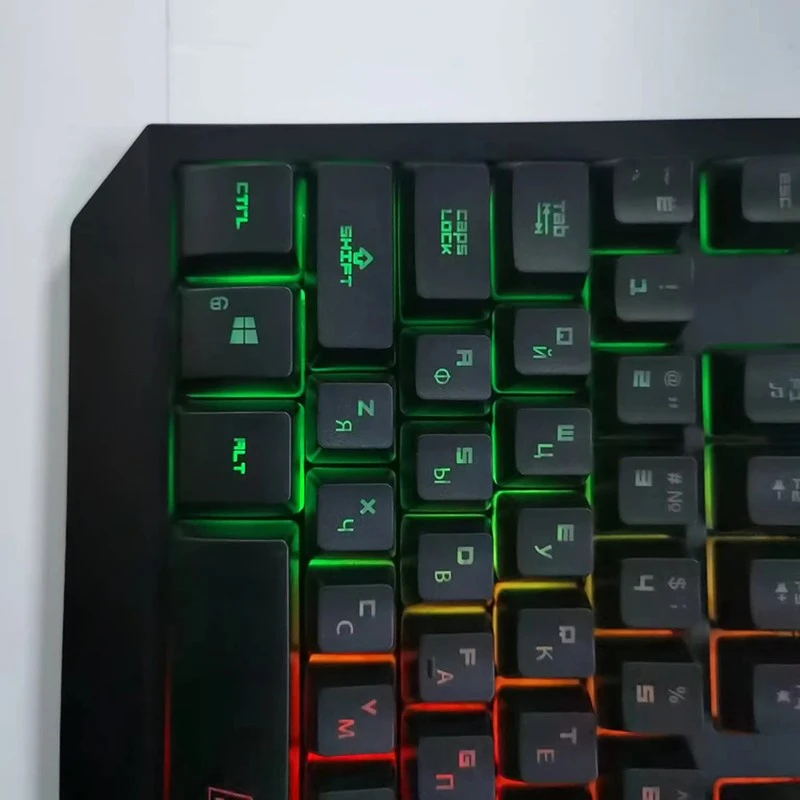
3. Production process and cost of membrane keyboards
(1) Production cost
The production cost of membrane keyboards is relatively low, mainly because:
Simple structure and low material consumption.
Mature production process and high degree of automation.
No complex mechanical structure (such as the shaft of a mechanical keyboard) is required.
This makes the price of membrane keyboards relatively cheap and suitable for large-scale production and promotion.
(2) Process improvement space
Although the cost of membrane keyboards is low, their gaming performance can be improved through process improvement:
Optimize circuit design: Add an anti-ghosting function to support more keys to be triggered simultaneously.
Improve key structure: Improve tactile feedback by adding elastic gaskets or optimizing key travel.
Material upgrade: Use higher-quality film materials and conductive coatings to improve durability.
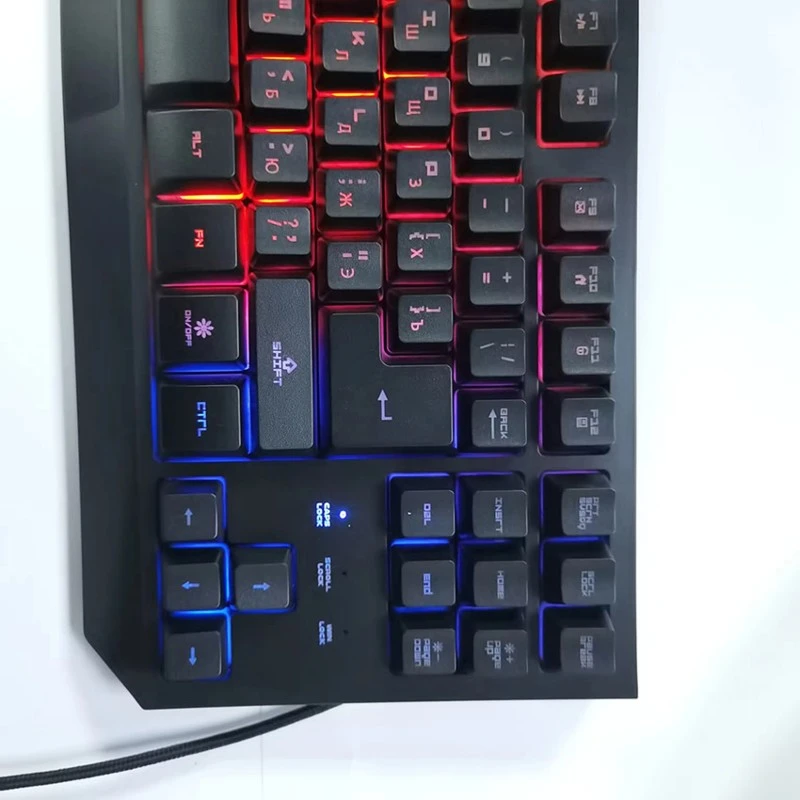
4. Market demand and user groups
(1) Target users
Casual players: They do not have high requirements for gaming performance and pay more attention to cost performance and appearance design.
Office users: They need a thin and silent keyboard that takes into account light gaming needs.
Users with limited budgets: They cannot afford the high price of mechanical keyboards and choose membrane keyboards as an alternative.
(2) Market positioning
Membrane keyboards can be positioned as entry-level gaming peripherals, focusing on cost performance and practicality. At the same time, they can attract more users through differentiated designs (such as RGB backlight, waterproof function, etc.).
5. Summary
Whether a membrane keyboard is suitable for playing games depends on the user's needs and budget:
Suitable scenarios: casual games, office and light games, and users with limited budgets.
Unsuitable scenarios: professional gaming scenarios that require quick response and precise operation.
As a factory, we can improve the gaming performance of membrane keyboards while maintaining their cost advantages by optimizing design and production processes. In addition, we can also launch product lines with different positioning (such as entry-level gaming keyboards, office and gaming dual-purpose keyboards, etc.) according to market demand to meet the diverse needs of users.
