




Can I use a handheld fan in a moving vehicle?
 Jul 07, 2025|
 As a supplier of handheld fans, I often receive various questions from customers. One frequently asked question is whether it's safe and appropriate to use a handheld fan in a moving vehicle. In this blog, I'll explore this topic from multiple aspects, including safety, functionality, and legal considerations.

Safety Considerations
Distraction to the Driver
The primary concern when using a handheld fan in a moving vehicle is the potential distraction it poses to the driver. According to traffic safety research, any activity that diverts the driver's attention from the road can significantly increase the risk of accidents. If the driver tries to adjust the handheld fan, such as changing its angle or turning it on and off, their hands may leave the steering wheel, and their eyes may shift away from the road.
For example, a sudden gust of wind might cause the fan to move out of position, and the driver may instinctively reach for it to readjust. This split - second distraction can be enough to miss a stop sign, a pedestrian, or a sudden change in traffic flow. Therefore, if you are the driver, it is highly recommended not to use a handheld fan while the vehicle is in motion.
Airflow and Vehicle Interior
Another safety aspect is related to the airflow created by the handheld fan. In a moving vehicle, the air inside is already in a complex state of circulation due to the ventilation system and the movement of the vehicle itself. When a handheld fan is introduced, it can disrupt this natural airflow pattern.
For instance, if the fan is blowing air directly towards the dashboard or other sensitive electronic components, it may cause overheating or malfunction. Also, if the fan is placed in a position where it obstructs the view of the driver or blocks any important controls, it can create a safety hazard.
Projectile Risk
In the event of a sudden stop or collision, a handheld fan can become a projectile. If the fan is not properly secured, it can fly through the vehicle cabin, potentially causing injury to the passengers. This is similar to the risk of loose objects in a car, such as water bottles or small toys.
Functionality in a Moving Vehicle
Cooling Effectiveness
One of the main reasons people might want to use a handheld fan in a moving vehicle is for cooling. However, the effectiveness of a handheld fan in this scenario can be limited. In a moving vehicle, there is already a certain amount of fresh air entering through the windows or the ventilation system.
If the windows are open, the wind outside may overpower the airflow of the handheld fan, making it difficult for the fan to provide a significant cooling effect. On the other hand, if the windows are closed and the air - conditioning is on, the handheld fan may not be necessary as the air - conditioning system is designed to cool the entire vehicle cabin.
However, in some situations, a handheld fan can still be useful. For example, if the air - conditioning is not working properly or if a passenger wants more personalized cooling, a handheld fan can direct a stream of air towards their face or body.
Power Source
Most handheld fans are powered by batteries. When using a handheld fan in a moving vehicle, it's important to ensure that the batteries are fully charged. Some fans also come with the option to be plugged into the vehicle's cigarette lighter socket.
If you choose to use the cigarette lighter socket, make sure that the fan's power requirements are compatible with the vehicle's electrical system. Overloading the electrical system can lead to blown fuses or other electrical problems.
Legal Considerations
Local Traffic Laws
In many regions, there are specific traffic laws regarding the use of electronic devices in a moving vehicle. While there may not be explicit laws against using a handheld fan, if it is used in a way that distracts the driver, it can be considered a violation of the distracted driving laws.
It's important to check the local traffic regulations before using a handheld fan in a moving vehicle. In some areas, using any device that impairs the driver's ability to operate the vehicle safely can result in fines or other penalties.
Types of Handheld Fans Suitable for a Moving Vehicle
Hand Held Face Fan
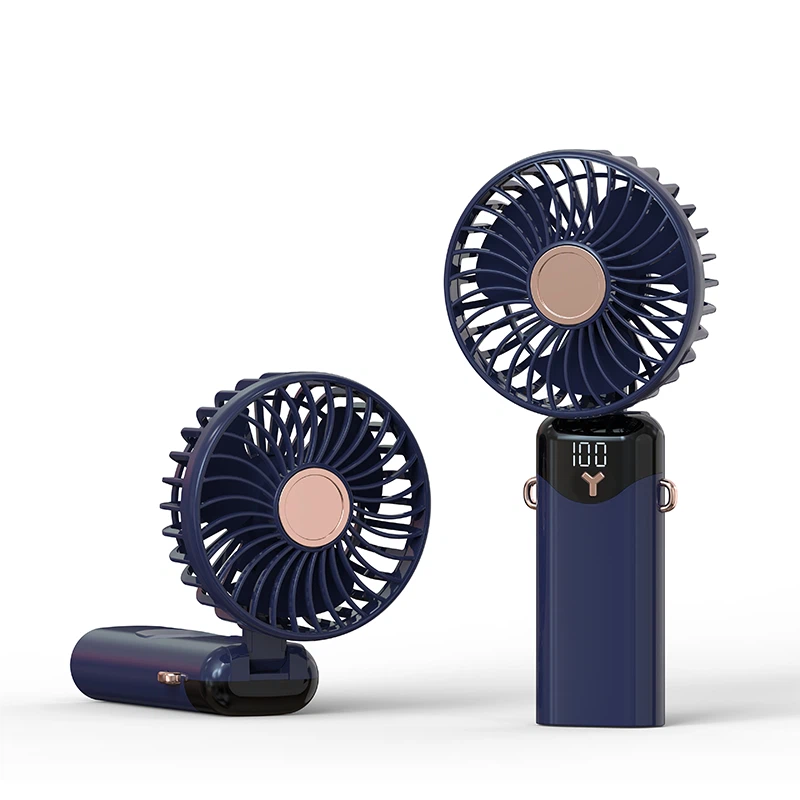
This type of fan is designed to provide a focused stream of air directly to the face. It is usually small and lightweight, making it easy to hold. However, as mentioned earlier, if you are the driver, it should not be used while the vehicle is moving. Passengers can use it to cool themselves, especially if they want more personalized airflow.
Hands Free Personal Fan
A hands - free personal fan is a great option for use in a moving vehicle. These fans can be attached to the seat, headrest, or other parts of the vehicle, eliminating the need to hold them.
They provide a consistent airflow without causing distraction to the driver. Some hands - free personal fans also come with adjustable angles, allowing passengers to customize the direction of the airflow.
Honhey Handheld Fan
The Honhey Handheld Fan is known for its high - quality build and efficient performance. It offers multiple speed settings, which can be useful in a moving vehicle. Passengers can adjust the speed according to their comfort level and the ambient temperature inside the vehicle.
Conclusion
In general, while it is not advisable for the driver to use a handheld fan in a moving vehicle, passengers can use them with caution. When choosing a handheld fan for use in a vehicle, it's important to consider safety, functionality, and legal aspects.
If you are interested in purchasing high - quality handheld fans for personal use or for resale, we are a reliable supplier. Our range of handheld fans, including the Hand Held Face Fan, Hands Free Personal Fan, and Honhey Handheld Fan, are designed to meet various needs. We welcome you to contact us for more information and to discuss your procurement requirements.
References
- Traffic Safety Research Institute. "The Impact of Distracted Driving on Road Accidents." Journal of Traffic Safety, 2022.
- Vehicle Ventilation and Airflow Studies. Automotive Engineering Research Center, 2021.
- Local Traffic Laws Compilation. Department of Transportation, various regions.